Tuesday, January 27, 2015

4.3 - Blog 4: Ethical Issues in the News| Superbowl XLIX

    This coming Sunday is probably America's most unofficial, official holiday. It's known around the country as Superbowl Sunday, but the difference between years past and this one is certain ethical events leading up to it.

   If you watch sports news at all, or listen to it on the radio; you will have heard something about the "deflate-gate" as they're calling it. By them I mean the sports media and the NFL. There is an investigation going on right now about whether or not the New England Patriots purposefully deflated 11 of their 12 footballs (which makes them easier to grip) in the AFC Championship game against the Indianapolis Colts. While the score (45-7) is pretty appalling, this development seems to have made more headlines than the actual game.

   While most people focus on the "who done it" aspect, I would like to examine it through the eyes of an ethics student. Ethically we find that there are probably three universal values (as suggested by James Rachels). They are: A policy of caring for small children and infants, a rule against lying, and a rule against murder. The Patriots deflate-gate falls into the second category (based on what the media is portraying). A person is innocent until proven guilty; however, some opposing fans have seemed to forget that. Now that I'm off topic let me do an about-face back to my ethics topic. I found it interesting that no matter who the fans are; whether they be Patriots fans, Colts fans, or Seahawks fans, they all want to know the truth, What is the truth concerning this NFL predicament? Some want it to jaunt the other rivals, but most people are just curious as to what really happened. This whole scenario just seems to back up the idea that universally there is some form of goodness and ethics in people. The unspoken rule against lying goes a long way, even in today's world.

   Whatever the outcome is, I know they will get to the bottom of this dilemma. Either way I'll be enjoying the superbowl with friends and family, and I hope you'll be doing the same.


References used:

Alesia, M. (2014, January 22). Sports ethics experts analyze Belichick, 'DeflateGate'. [Web log]. Retrieved from http://www.indystar.com/story/sports/nfl/colts/2015/01/22/sports-ethics-deflategate-bill-belichick-new-england-patriots-indianapolis-colts/22153199/.

Rosenstand, N. (2013). The Moral of the Story: An Introduction to Ethics. New York, NY: McGraw-Hill.

Tuesday, January 20, 2015

|Ethical Issues in the News 2.3|Afgan Villager Seeks Asylum in U.S.

 Lone Survivor- a true story about a team of Navy SEALS in Afghanistan. Recently, I found an article on the Afghan villager who saves Navy SEAL Marcus Lutrell in the movie. The same villager is a real individual who lives in Afghanistan to this day. Recently, he's been trying to gain access to the United States. The reason being his safety and fear for his life. He has been receiving death threats from terrorists, specifically because of his part in saving Marcus Lutrell. He visited the United States in 2013 for the release of the movie in which he is portrayed as the lifesaver of Marcus Lutrell. Currently, the Department of Homeland Security is checking into his files and reasoning whether it would be beneficial to bring him into the United States. According to the Department of Homeland Securities website, people may seek "asylum" in the United States in cases of persecution from foreign groups. Lott (2015) quotes Michael Wildes (the pro-bono attorney taking the case for Mohammad Gulab) as saying, “He is not safe until he’s on U.S. soil." What do you think the Department of Homeland Security should do? What do your morals and ethics tell you about the situation? Mine tell me that he showed humanitarian aid to a US military member, and should be treated in the same manner. Why is this article making national news? Who is this seemingly obsolete villager that is now known worldwide?
 For today's topic I decided to focus on something related to the movie community, and also the military world. Many people are familiar with the movie
   How does this tie in with the study of ethics and morals? In chapter two of the textbook, the relationship is shown between stories and morals lessons. I personally believe that the movie Lone Survivor had a huge role in the publication of Mohammad Gulab, and how he cared for one of our own military members overseas. According to Rosenstand (2013), "Another philosopher, Philip Hallie, states that without feelings of the victims of evildoing, we can't hope to understand what a moral sense is all about." ... "Without sympathy for other people, our principles may go astray. On of the ways in which we can engage both our sympathy and our moral principles is thorough stories.".
   I would venture to say that the name Muhammad Gulab would be just another name if it wasn't for the movie which portrayed his courageous actions. His actions are told in a story-like manner on the big screen. Because of it, we sympathize for him and also for his situation. It goes to show that this movie is a paradigm of what it means to connect our sympathy and moral principles; then to see them appear off screen in reality.


References:

Lott, M. (2015). "Afghan villager who saved Navy SEAL in hiding, seeking US asylum". Retrieved from: http://www.foxnews.com/us/2015/01/19/afghan-villager-who-saved-navy-seal-in-hiding-seeking-us-asylum/


US Citizenship and Immigration Services. (2013, January 22). Retrieved from: http://www.uscis.gov/humanitarian/refugees-asylum/asylum


Rosenstand, N. (2013). The Moral of The Story: An Introduction to Ethics. New York, NY. McGraw-Hill Publishing.

Saturday, January 17, 2015

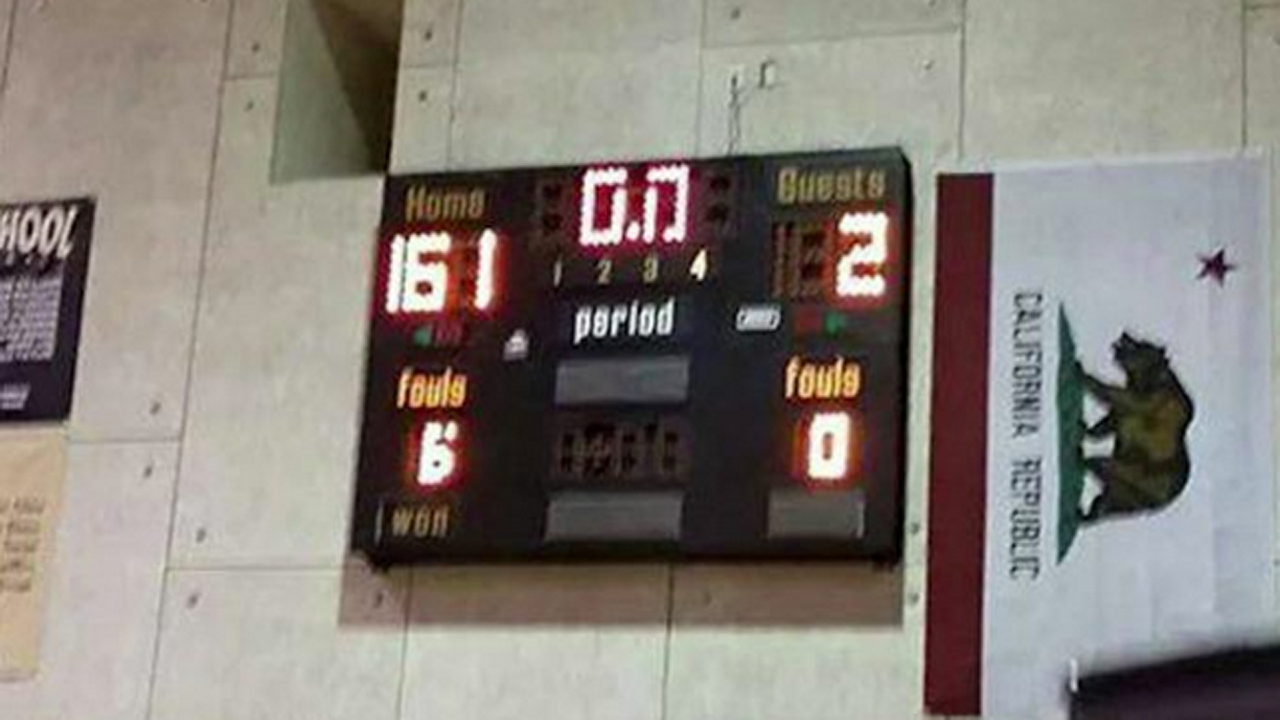
|Ethical Issues in Today's News| California girls high school basketball coach suspended after 161-2 victory


View image on Twitter


   How does the title of this post make you feel? What information on morals or ethics can you glean just from the title in this article? The article I found for my first post comes from sunny San Bernadino, California; where the setting is a high-school girls basketball game. The motive for the article is to show the lack of ethics displayed by a coach in his unprofessional and unsportsmanlike conduct. To shorthand the article, Arroyo Valley High-school beat Bloomington High-school 161-2. Despite the large margin of victory, the coach for the winning team played a full-court press the entire game. However, this account doesn't match up very well with his story. Daniels (2015) "He tried to slow the onslaught by benching his starters at halftime and telling his reserves to burn the shot clock before trying to score. A running clock isn't allowed until the fourth quarter under current high school rules." The coach is also quoted saying, "I didn't think it would be that bad". It would appear that the coach (Anderson) was trying to be "humane" in his treatment of the other team. However, his actions in letting his team win with a 159 point difference would say otherwise. The question that came to my mind is "why". Why would you blow out a team that badly just to show dominance. Obviously, in all sports or competitions there is a certain level of pride and competition to be expected. Every person wants to have "that team" that has the manpower or individual skills to destroy the opposition. However, I think all of us can conclude that there is a limit to how far it goes, and to what extend it is considered reasonable. I would venture to say that coach Anderson took it to the level that the game wasn't intended to be taken to. 

    Let's get back to the ethics, or lack of, in this new article. If we consider how our emotions play into our morals (and ethics) then we can come to several neat conclusions. Above I asked how it made you feel to hear about one basketball team destroying another team. Ironically, there are two separate emotions present in this said article. One emotion being joy- the joy that comes from a hard-earned victory. The other emotion that is present is that of anger or hurt. Hurt often follows anger and is forced to follow in anger's footsteps. Although I wouldn't necessarily say that anger from the coach is present in this scenario, it is something to be noted. As I was saying, the emotions of hurt and joy are on two different ends of the spectrum. Having both of these present creates a unique situation. In the textbook it describes morals in union with emotions. Rosenstand (2013) states that, "...other voices are adding that a good moral argument is compelling not just because of its logic but also because it makes sense emotionally. If we have no feeling of moral approval or outrage, then do we really care about whether something is morally right or wrong?" (pg. 19) This goes to show that having emotions is a huge part of having morals and thus ethics with which to confirm our moral standards. 

   In the case of the basket ball article it can and should be said that the coaches ethics were in question. However, in seeing that situation we can tune ourselves for that kind of scenario. How would we react or act in that situation? Another quote taken from the article- Marshall (2015), "I've known him for about seven years... He's a great X's and O's coach. Ethically? Not so much," he said. "He knows what he did was wrong.". After serving his suspension the coach has a chance to change and make it up to his team and peers. Hopefully he learned a valuable lesson in ethics that each of us can take something away from.


Reference List:

Daniels, T. (2015, January 16). California High School Girls Basketball Coach Suspended After Massive Win. Bleacher Report. Retrieved from http://bleacherreport.com/articles/2332169-california-high-school-girls-basketball-coach-suspended-after-massive-win?utm_source=cnn.com&utm_medium=referral&utm_campaign=editorial 

Rosenstand, N. (2013). The Moral of The Story: An Introduction to Ethics. New York, NY: McGraw-Hill